4 Types of Hair Bonds and How to Repair Them
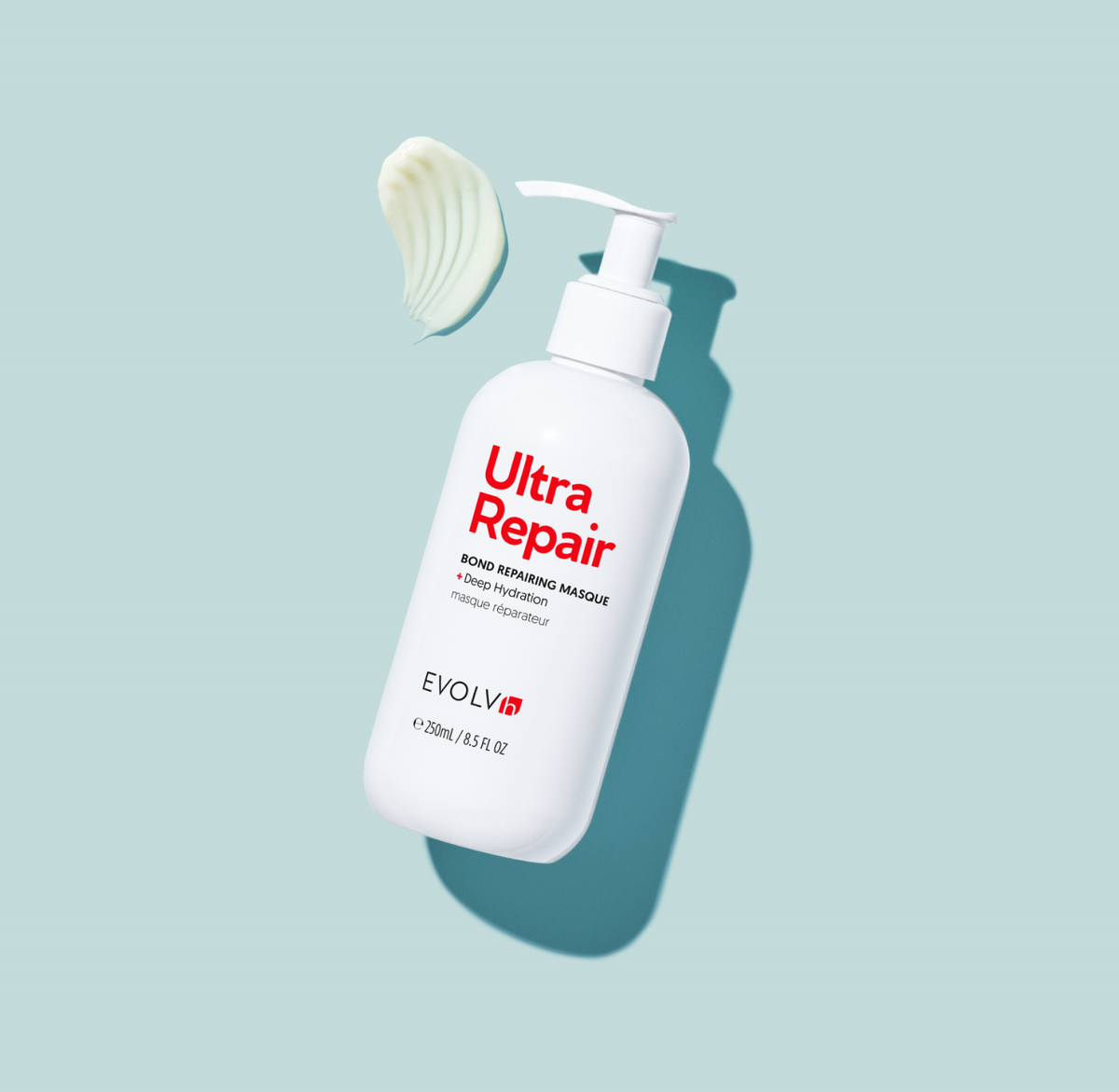
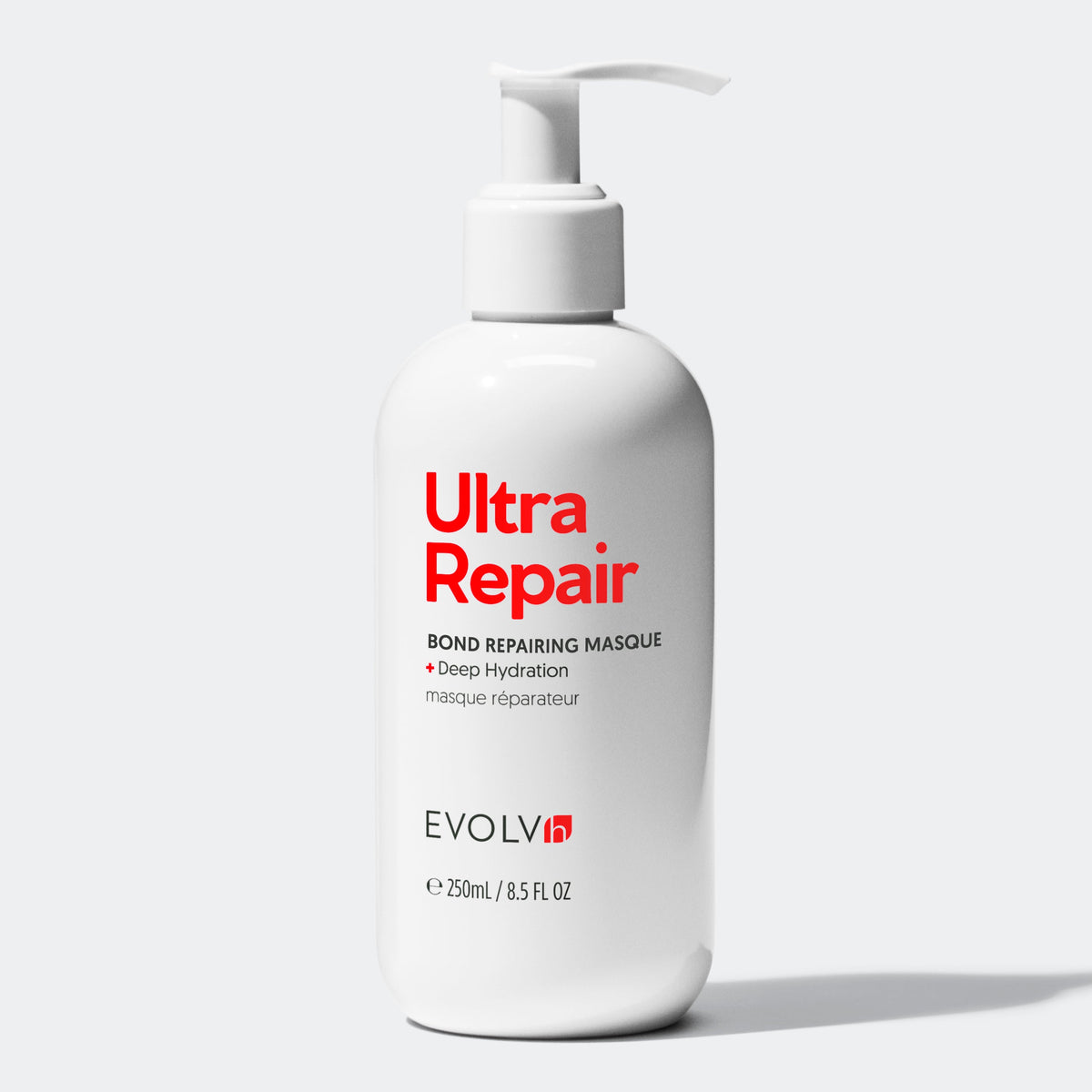
Every strand of hair is a tightly engineered structure, held together by 4 types of bonds. When they're intact, hair is strong, springy, and smooth. When color, heat, or everyday wear breaks them, hair turns brittle, frizzy, and quick to snap. Understanding the types of hair bonds is the first step to repairing them, and it's the science behind the 4 layers of repair in UltraRepair Bond Repairing Masque.
What are the 4 types of hair bonds?
Hair is made mostly of keratin, a protein built from long chains of amino acids. Four types of bonds build those chains and hold them in shape:
-
Peptide bonds: Very strong. They link amino acids into keratin chains, the backbone of the strand. Strong alkaline chemicals and repeated harsh processing break them.
-
Disulfide bonds: Strong. They bridge neighboring keratin chains with sulfur links, setting strength and curl pattern. Bleach, permanent color, perms, and relaxers break them.
-
Hydrogen bonds: Weak and temporary. They hold chains in their coiled shape and give hair flexibility. Water and heat break them, and they reform as hair dries.
- Ionic (salt) bonds: Weak. They connect charged parts of the protein for added stability. Shifts in pH break them.
Why Hair Damage is Never just One Bond
Damage rarely stops at a single bond. Bleach breaks disulfide bonds, then leaves gaps in the protein structure that make hair porous. Porous hair swells with every wash, which strains hydrogen and ionic bonds. A lifted cuticle lets moisture and lipids escape, so the outer barrier weakens too.
That's why single-ingredient fixes often fall short. Repair needs to work at every level damage reaches.
The 4 Layers of Repair
UltraRepair Bond Repairing Masque is built in four layers, each matched to a different part of the strand.
Layer 1: Bonds, the internal connections
TeraBond™ supports repair of compromised internal bonds, restoring strength and resilience from within. It targets disulfide bonds, the strongest links between keratin chains. In a confocal Raman spectroscopy study at the Textile Research Institute in Princeton, New Jersey, TeraBond™ repaired 50% of broken disulfide bonds in bleached hair.
Layer 2: Keratin, the protein structure
Restart PRO 1695 and Creatine reinforce the hair's keratin matrix, strengthening the fiber and reducing breakage. Restart PRO 1695 pairs itaconic acid and arginine with pro-vitamin B5 and polysaccharides from linseed and chia seeds, forming cross-links that reinforce chemically damaged hair. In its developer's tensile testing, it increased the strength of chemically damaged hair by up to 9.9%.
Layer 3: Fiber, strength and elasticity
FiberHance™ BM reinforces hydrogen bonds to improve flexibility, resilience and strand strength. Derived from glucose, it penetrates into the cortex and builds new hydrogen and ionic bonds within the keratin structure. In single-fiber fatigue testing by its developer, it made hair up to 3x stronger than untreated hair.
Layer 4: Barrier, protection and shine
Hairflux®, AminoSensyl™ and ProShine® support the cuticle barrier, improve detangling and deliver silicone-free shine. Hairflux® pairs an olive-derived ceramide with plant oils to replenish lost lipids. On bleached hair, a conditioner with 1% Hairflux® reversed about 75% of the extra swelling bleach caused, so strands hold their shape wash after wash.
What 4 layers of repair feel like
Inside, the strand is reinforced from its core to its cuticle. Outside, you feel it as you rinse: hair that slips through your fingers, combs out without a fight and dries with a glossy, healthy-looking finish.
Shop UltraRepair Bond Repairing Masque
Hair bond FAQs
What is the strongest bond in hair? Peptide bonds form the keratin backbone, and disulfide bonds are the strongest links between chains. Disulfide bonds are the ones chemical services most often break.
Which hair bonds does bleach break? Bleach mainly breaks disulfide bonds and damages the protein structure around them, which also weakens the cuticle barrier.
Can hydrogen bonds repair themselves? Yes, temporarily. They break with water and heat and reform as hair dries. When the surrounding structure is damaged, they reform less effectively, which shows up as frizz and lost shape.
Why is my hair losing its curl pattern? Disulfide bonds help set your natural curl. When they break, curls can loosen and lose definition.